Home  ·  What We Do

The Organizational Health Check

Two assessments. One costed report.

One reads the whole organization. The other reads the people making the decisions. Run one, the other, or both inside the same window — and in four to six weeks you have a board-ready report with a dollar figure on every gap.

Fixed fee, agreed in writing before anything starts. Almost none of the four to six weeks is your time.

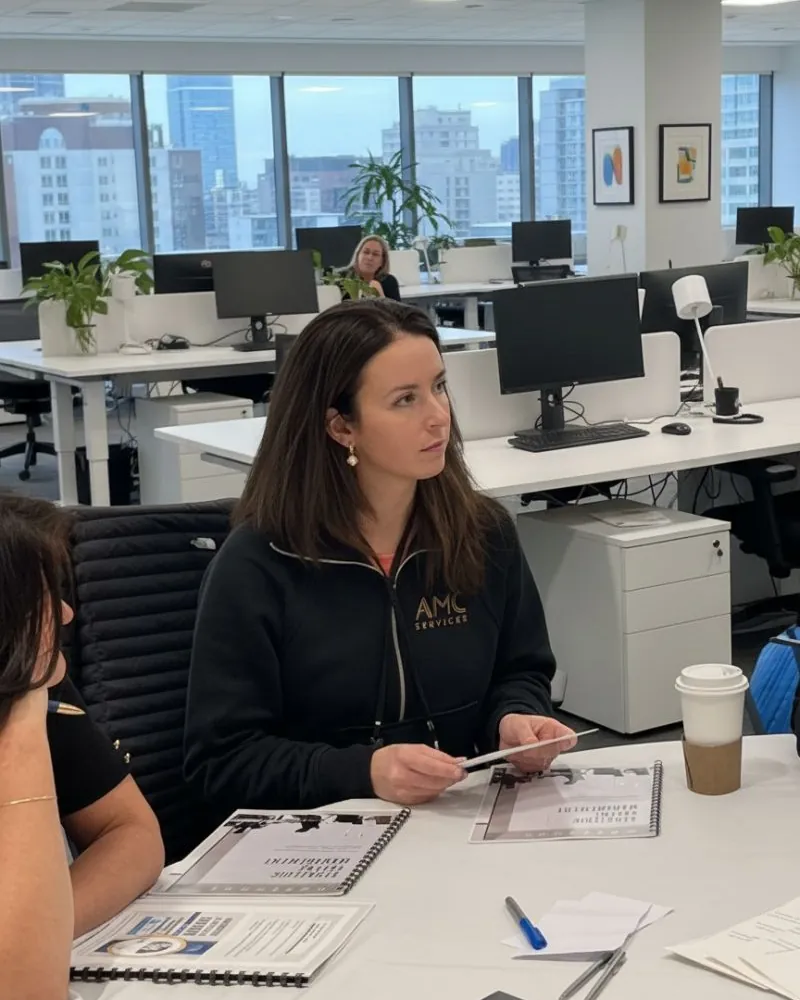
Agnes Watkinson in a working session, assessment materials on the table

What we measure

One reads the organization. The other reads the people making the decisions.

They answer different questions, they can run inside the same window, and you are never obliged to take both.

Assessment oneThe Alignment Check
  • WhoEveryone, or whichever population you choose — a department, a site, a region, or a pilot group.
  • ReadsDirection, decision rights and candour: whether the organization pulls one way, whether anyone knows who decides, and whether bad news travels fast enough to act on.
  • EffortUnder ten minutes per person.
  • You seeAn Alignment Index against your sector benchmark, the gap between what leaders believe and what their people experience, and where the cost sits by division.
The question it answersWhere is execution breaking down, and what is it costing us?

Assessment twoThe Leadership Simulation
  • WhoLeaders, typically director level and above.
  • ReadsWhat leaders actually prioritise and trade away under pressure, across fifteen competencies in four orientations — behaviour, not personality, and not interview performance.
  • Effort45 minutes per leader, plus about three hours of executive time to define the future state.
  • You seeEvery leader matched against the competencies your future state requires, where the bench is thin, and a targeted development plan.
The question it answersCan the people making the decisions deliver the business we are trying to become?

The overlay

Run both, and you can tell which problem you actually have.

One tells you the organization is misaligned. The other tells you whether the leaders in place can fix it. Together they tell you which problem you actually have — and leaders assessed under both are only counted once in the fee.

Both assessments: the full picture.

How we get to a dollar figure

Every other assessment gives you a score. We give you a number.

A score tells you that something is a 62 out of 100. It does not tell you what to do, and it does not survive a board meeting. We take the scored findings, cross-reference them against your own operating and compensation data, and express each gap as an annual cost to the business.

Step one

Measure

The assessment goes out. Interviews run in parallel with people your executives pre-approve. Both are confidential.

Step two

Cross-reference

Interview findings are checked against the quantitative data. To date, 100% of what people told us has supported what the numbers showed.

Step three

Cost

Each gap is priced against your own compensation and operating figures — not a generic industry multiplier.

How it runs

Four to six weeks, and almost none of it is your time.

The same four stages sit under every engagement, whatever its size. You control the third.

Diagnose

Assessment links out, interviews with people your executives pre-approve, and the executive sessions that define your future state.

Report

Findings cross-referenced, dollarized on your own figures, every leader matched to the model, and a remediation plan written for your team.

Pause

Findings take time to absorb, and there is usually a second conversation to have with the board or the team. You set the direction; nothing moves until you do.

Solve

When you choose to act, we scope against what the evidence found and deploy the specific expertise it pointed to, from a vetted roster.

Where your time goes

The six weeks are ours. This is yours.

The executive team: about 5 hours 15 minutes across six weeks — roughly 2% of its working hours.

Based on a 40-hour week. Everything else in the six weeks is AMC's work.

Weeks 1–2
Assessment links out, interviews with people your executives pre-approve, and the executive sessions that define your future state.
Week 3
Findings cross-referenced against the data, dollarized on your own compensation figures, every leader matched to the model.
Weeks 4–6
Written up, presented live to your leadership team, then handed over. Where it lands is set by your calendar, not ours.

What you receive

The reportBoard-ready and dollarized, in the context of your business.
The roadmapOwners, sequence and milestones your team can run.
The live walkthroughA 90-minute session so the findings land in the room.
The evidenceYour scored data and benchmark position, yours to keep.

Then we pause.

Nobody makes a good decision about their own organization while being rushed. So we don't rush you.

Findings about your own people take time to absorb, and most leaders want to sit with them before saying anything out loud. There is usually a second conversation to have as well — with the executive team, the board, or the people the report is about — and occasionally what it surfaces is a reason to change course rather than proceed.

The pause is yours and there is no clock on it. Many clients run the remediation with their own people — that is what the report was written for. Come back when the timing is right, and we scope against what the diagnostic already found.

Agnes Watkinson and Leslie Dibling, seated

When you are ready to act

Two ways forward, and both of them are fine by us.

Option one

Run it yourself

The remediation plan is written so your own people can own it — owners, sequence, milestones, in plain language. Many clients never come back for stage four, and the report was built for exactly that.

Option two

Bring in capacity

You're not buying a fixed team you have to keep busy. We scope against what the diagnostic actually found, then deploy the specific expertise the evidence pointed to — from 130+ vetted consultants and industry partners across four regions.

Pricing & next steps

Fixed fee, agreed in writing, before anything starts.

No retainer, no open-ended scope, no surprise invoice. Pricing is driven by how many people are assessed, and you choose the population.

The Alignment Check

Priced on the number of employees who receive an assessment link. You choose the population — a department, a site, a region, or everyone.

The Leadership Simulation

Priced on the number of leaders assessed. Typically director level and above.

Either, or both

Run one on its own or both together. Leaders assessed under both are counted once.